Refunds, Strategies, and Implications
Tariffs can affect much more than the price of imported goods. They can change your tax position, supply chain costs, contracts, cash flow, and business plans.
If your company imports goods into the United States, now is a good time to review how tariffs may affect your business.
Tax Guide to U.S. Tariffs 2.0: Refunds, Strategies, and Implications explains what businesses should know and what they may want to review next.
Tariff Changes May Create Risks and Opportunities
The U.S. tariff rules continue to change. That makes it harder for businesses to know what they owe, whether they may qualify for a refund, and how tariffs could affect future costs.
Tariff planning should also be part of your larger tax strategy. Changes in tariffs can affect federal taxes, state taxes, transfer pricing, business expenses, and decisions about where goods are made or purchased.
This guide can help you understand the issues before you make your next move.
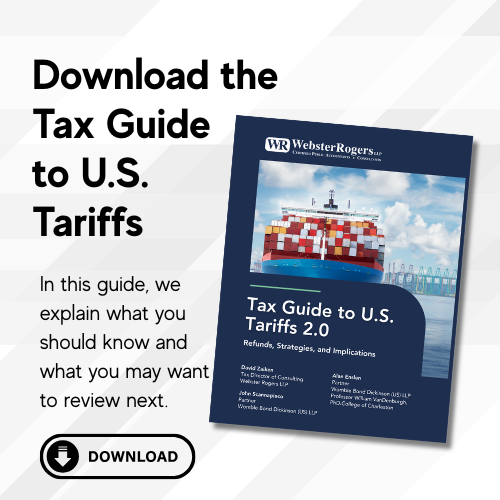
What's inside?
Inside the guide, you'll learn about:
- IEEPA tariff refunds. Learn about the refund process and steps importers may need to take to protect a refund claim.
- Tariff planning strategies. Explore ways businesses may be able to reduce tariff costs or better manage tariff risk.
- Import compliance. Understand why HTS codes, country of origin, importer of record, and the value of imported goods matter.
- Supply chain decisions. See how suppliers, manufacturing locations, foreign trade zones, bonded warehouses, and other options can affect tariff costs.
- Transfer pricing. Learn why related-party transactions may need another look when tariffs change costs and profit.
- Federal and state tax planning. Understand how tariffs may connect with deductions, asset purchases, R&D expenses, interest expenses, sales and use taxes, and other tax issues.
Could Your Business Be Paying More Than It Needs To?
The answer may depend on more than the tariff rate.
Businesses should review how imported goods are classified, where goods come from, who serves as the importer of record, how imported goods are valued, and how contracts divide tariff costs.
For example, using the wrong Harmonized Tariff Schedule (HTS) code can result in the wrong tariff amount. A more accurate classification may sometimes result in a lower tariff rate.
Other strategies may include duty drawback programs, foreign trade zones, bonded warehouses, the First Sale Rule, supply chain changes, and U.S. manufacturing or assembly.
The right approach will depend on your business, products, suppliers, and tax situation.
Tariff Planning and Tax Planning Should Work Together
Tariffs do not happen in a tax vacuum.
New federal tax rules have created planning opportunities related to asset purchases, R&D expenses, and business interest deductions. Tariffs can also affect state and local taxes and the financial case for moving manufacturing or other operations to the United States.
Looking at these issues together can help your company make better decisions about costs, investments, suppliers, and future growth.